Location
Other maps: Google, MapQuest.
Coordinates: 34.6849,-76.5272.
Type: Stop
Tour: Cape Fear
County: Carteret
 Difficult
Enhance your visit to the Cape Lookout Lighthouse with the story of a now-submerged Revolutionary War fort. The National Park Service licenses a passenger ferry from the Harkers Island Visitor Center at the coordinates. See the Cape Lookout National Seashore website for details. The ferry may stop at the island called Shackleford Banks first, but wait to get off at the lighthouse.
The ferry and the boardwalk where it normally stops are wheelchair accessible. However, that stop was closed for repairs in February 2026, so the ferry began dropping people on the shore at a distance from the boardwalk. Those requiring a wheelchair will need a beach version and assistance until the regular ferry stop reopens. Check the Seashore website above for current status.
Pirates and Privateers
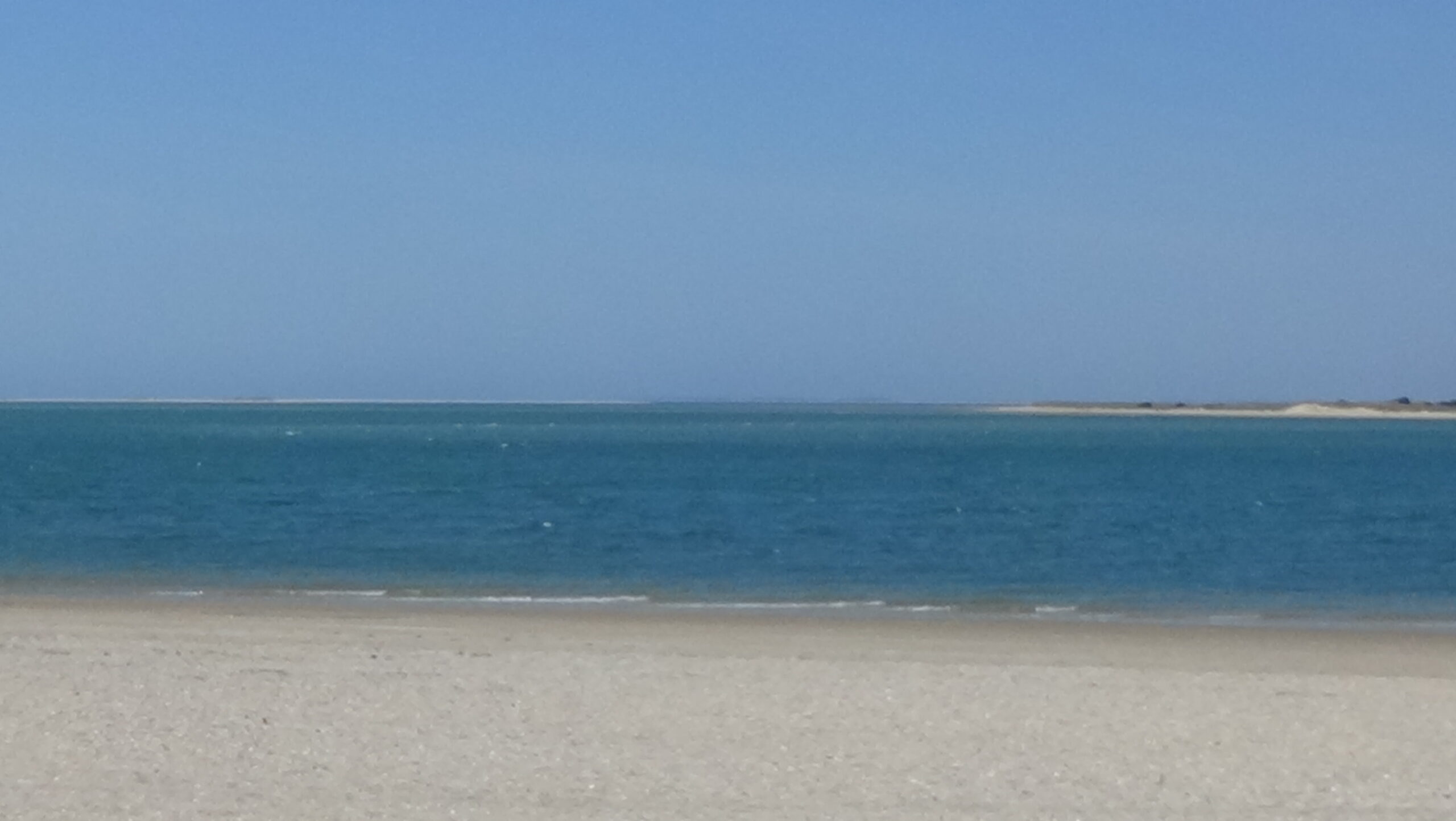
Go to the beach just south of the ferry boardwalk (left when facing the water). With your eyes, draw a line across to Shackleford Banks. This channel, Barden Inlet, was opened by a hurricane in 1933. During the American Revolution there was land there, connecting Shackleford with this island, South Core Banks. The south shore was somewhere near your imaginary line, probably curving left as it neared you.
In the distance, to the left of Shackleford, is the inlet from the Atlantic Ocean. The sandy strip farther left, up to the point where there is greenery, is Power Squadron Spit. It did not exist in Revolutionary days, so the inlet was wider then.
Cape Lookout Bight, the small harbor to your left, had been a rendezvous point for decades by the time of the American Revolution. Edward Teach (“Blackbeard”) and other pirates used it in the early 1700s. So did Spanish privateers—pirates operating for their king—in a war against England in the 1740s. Royal Gov. Arthur Dobbs visited in 1755 and drew up plans for a fort to protect it. Nothing came of them, however.
Two years into the Revolution, in October 1777, a two-masted privateer pulled into the bay through the inlet. The North Carolina Gazette of New Bern reported it was “‘loaded with Fruit and Turtle’” for a British admiral in New York. A company of Patriot “militia” soldiers—state troops, not part of the Continental Army—was stationed here under Capt. Enoch Ward. Someone told Ward the ship was on the Patriots’ side, but he wasn’t fooled. He and his men rowed a boat to it that night and claimed it.